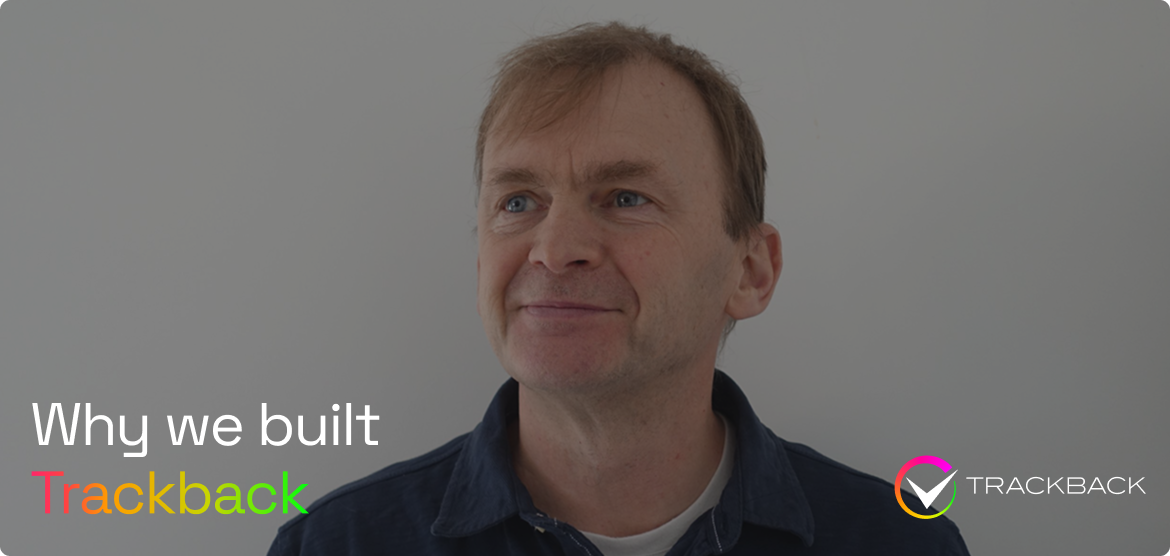
Why We Built Trackback.io (Conversation with Ian, Founder of Rightlander and Trackback.io)
 by Katherine Tutton | 20th May, 2026
Q: Can you explain your background and what Rightlander does?
Ian: I worked in the finance sector as a developer before using my programming knowledge to start my first business. I also built an affiliate network over 12 years, before selling it and creating Rightlander nearly 9 years ago.
Rightlander started life as an affiliate compliance monitor to help advertisers and networks to identify potentially non-compliant content from their partners across different markets and online advertising channels. It has recently evolved to help marketers gather intelligence insights for revenue growth and to provide offer monitoring during the risk scanning process. It does this by scanning third-party published marketing content from within the target market, looking for events or conditions that may be contravening local regulations or brand guidelines and then surfacing untapped marketing opportunities from these risk-assessed sources. Our proprietary technology scans content from the web and social media in over 70 countries and has even won “Best Tech” awards in the affiliate sector.
Q: Why did you create Trackback?
Ian: Over time, we have worked with some very large programmes across sectors like finance, gaming and ecommerce. What became obvious quite quickly was that most affiliate programmes were struggling to identify the copious amounts of traffic sources that affiliate partners deploy. The main pain point was trying to evaluate the quality of these sources and any risks they posed to our clients in respect to misleading consumers or damaging the brand's integrity.
There was also another important factor that had been bugging me for some time: marketers need to be able to quickly assess the longer term potential of a partner before they decide to invest time and money into the relationship. That means understanding the risks, the quality of the content and the revenue potential. So that is what Trackback focuses on: using risk scanning to drive more stable revenue streams.
Q. What has your experience at Rightlander told you?
Ian: The same themes kept coming up. Brands didn't know where traffic was coming from. They couldn't properly see sub-networks, indirect traffic paths or how affiliates were promoting them across social and content channels.
At the same time, affiliate ecosystems are becoming more fragmented and harder to monitor manually. Most teams were relying on spreadsheets, assumptions or surface-level reporting. That creates two problems:
1. Risk goes unnoticed.
2. Growth opportunities get missed.
You can't properly manage a partner ecosystem if you can't really see it.
Q: So why create Trackback separately from Rightlander?
Ian: Rightlander typically works with larger enterprise programmes that have more complex and often customised compliance and monitoring solutions. But we realised SMEs were facing many of the same visibility problems yet without the budget, resource, time or the requirements of an enterprise implementation. Trackback is designed to bridge that gap.
We wanted to build something simpler, faster and more accessible for smaller teams. A self-serve platform that gives affiliate managers clearer insight into traffic sources, partner behaviour, program health and growth opportunities without overwhelming them with complexity.
Q: Who is Trackback built for?
Ian: It's really designed for lean affiliate teams. Maybe that's geo-targeted ecommerce brands, brands who are growing or in instances where one person is wearing multiple hats across partnerships, marketing and commercial growth and just hasn't got enough time to do everything. Or maybe someone needing help reading content in other languages.
Those teams still need visibility: in many ways they may need it more because they don't have large internal resources. Trackback is designed to help them quickly prioritise the risk and growth insights to focus attention.
Q: Why do you think this matters more now than it did a few years ago?
Ian: Affiliate marketing has evolved massively. Traffic sources are more layered, social promotion has exploded (and is likely to grow even faster as AI affects attribution), content evolves faster and brands are under more pressure from both regulators and consumers.
At the same time, performance alone isn't enough anymore. Brands increasingly want to understand:
- Who is driving value
- How their brand is being represented
- Where they are being exposed
- Which partners deserve more investment
Visibility has become commercially important, not just operationally useful.
Q: What makes Trackback different from traditional affiliate reporting?
Ian: Traditional reporting tells you what happened. Trackback focuses more on why it happened, where it's coming from and wherever possible, what you can do about it. We're constantly finding new ways to surface context behind affiliate activity:
- Hidden traffic pathways
- Sub-network visibility
- Social promotion
- Unusual changes in activity
- Potential quality or compliance concerns
- New relevant content where your brands have been overlooked
The goal is to help teams act faster and make better decisions.
Q: You talk a lot about "visibility". Why is that such a big theme for you?
Ian: Because most teams genuinely cannot see large parts of their affiliate ecosystem. I was an affiliate myself for over a decade and I know how it works. You have tracking links and you are constantly launching new content on new sites or social and incorporating those links. You don't communicate that to your brand partners: you just do it and they have no idea.
Full transparency over traffic sources and new content can bring a lot of extra value!
Q: What's your long-term vision for Trackback?
Ian: I want to help affiliate programs max out the potential of their partners. It's all well and good bringing in new affiliates but if you leave them to go unmonitored, you'll only ever achieve a fraction of what they could bring to you.
You could bring in a great affiliate and totally miss the fact that they generate most of their income through your competitors in a different country to the one you are focused on.
Ultimately, I want Trackback to help affiliate teams to not only feel more confident in the decisions they're making but to get the most they can out of every affiliate they sign up for as long as they can. To achieve that, it's crucial to understand the risks, the quality and the scale of the opportunity.
by Katherine Tutton
20th May, 2026
With 18 years' experience across London-based creative and marketing agencies, Katherine has led strategic client, communications and brand projects for a range of organisations. She now works across partnerships and marketing at Rightlander and Trackback.io, helping brands bring more visibility and control to affiliate marketing programmes.